Pro Tips
How Much Does a Bare Metal Server Cost? Bare Metal Pricing Explained

Rackdog Team
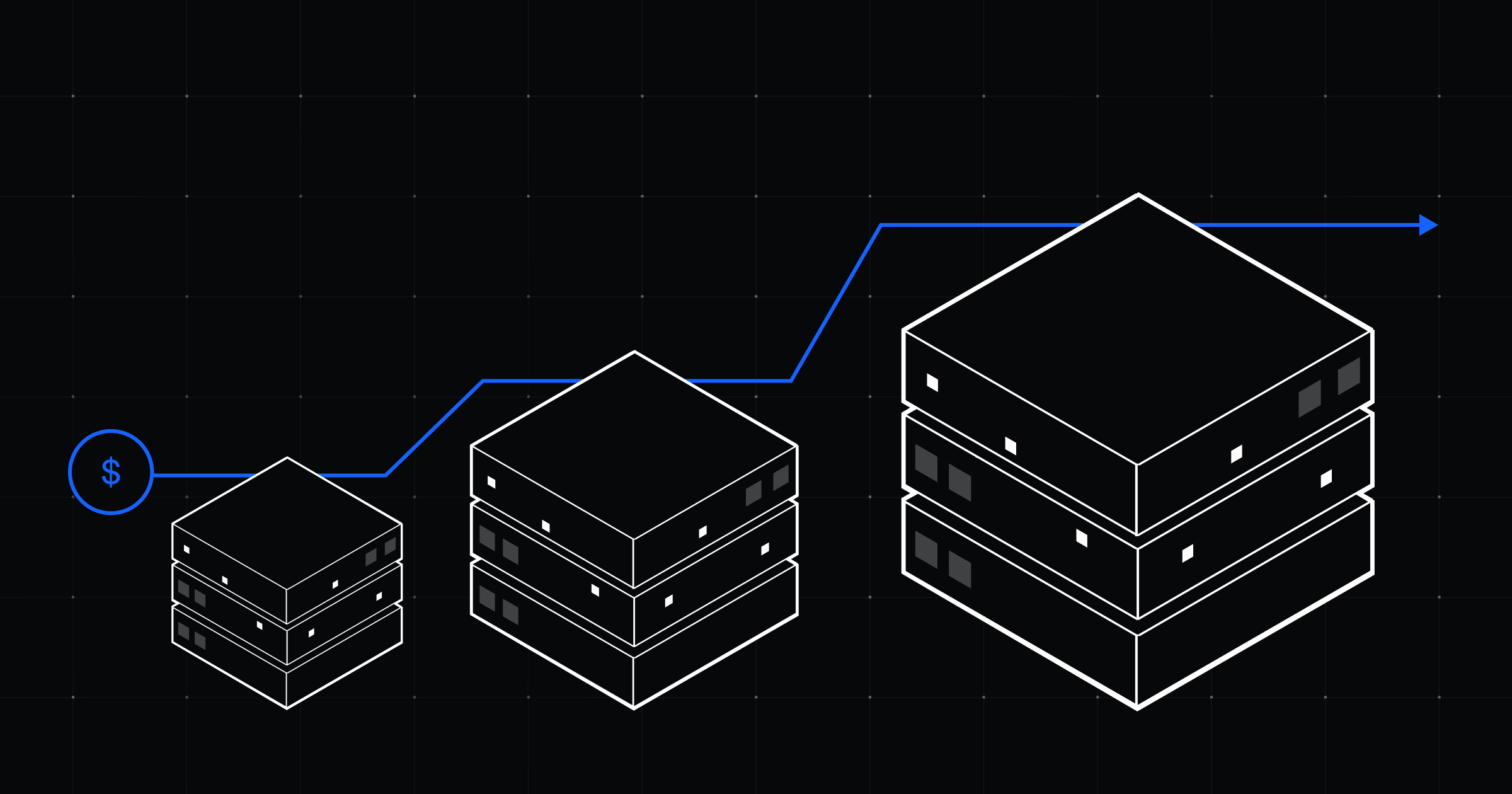
Bare metal servers typically cost anywhere from under $100 per month for entry-level dedicated servers to $1,000+ per month for high-performance configurations.
Most production-ready bare metal servers fall somewhere in the several-hundred-dollar-per-month range, depending on the CPU, RAM, storage, bandwidth, support level, and contract terms.
That wide range can make bare metal pricing difficult to compare at first glance. Two servers may look similar on paper, but the total cost can vary based on what is included, which provider is offering the server, and how the pricing model is structured.
In this guide, we’ll break down how bare metal server pricing works, what affects the cost, and how to compare providers more accurately before choosing a server.
For pricing specific to Rackdog’s bare metal servers, visit our pricing page.
What is a bare metal server?
A bare metal server is a physical server dedicated to a single customer. Unlike a cloud virtual machine (VM) or virtual private server (VPS), a bare metal server gives you direct access to the underlying hardware instead of running your workload on shared, virtualized infrastructure.
That means the CPU, RAM, storage, and network resources are reserved for your environment. You can install your own operating system, configure the server around your workload, and avoid the performance variability that can come from sharing physical infrastructure with other tenants.
How are bare metal servers priced?
Bare metal servers are usually priced based on how the server is delivered, how long you reserve it, and how much operational support is included.
At a high level, there are two common ways to use bare metal infrastructure:
Buying and managing your own hardware: Your team purchases the server, deploys it in an on-premises data center or colocation facility, and remains responsible for maintenance, replacements, networking, and physical operations.
Renting or leasing from a bare metal provider: The provider gives you access to a dedicated server in a facility they operate or manage. The provider is responsible for the physical infrastructure, including hardware maintenance and replacement.
Within the provider model, sometimes referred to as Bare-Metal-as-a-Service (BMaaS), you may see both self-managed and managed options:
Self-managed bare metal usually means the provider maintains the physical server, facility, and network, while your team manages the operating system, software, security configuration, and workloads running on the server.
Managed services add more provider support for setup, monitoring, troubleshooting, updates, backups, and other ongoing operational tasks.
From there, bare metal pricing is usually structured around one of a few common billing models.
Hourly pricing for bare metal servers
Some providers offer hourly billing for bare metal servers. In this model, the billing clock usually starts once the server is provisioned, not only when your workload is actively using CPU, memory, or storage.
Hourly pricing can make sense for short-term needs, such as performance testing, temporary capacity, or one-off projects. However, hourly rates are usually higher than the effective hourly cost of a monthly or longer-term server commitment.
Monthly pricing for bare metal servers
Monthly billing is the most common pricing model for bare metal servers. For a fixed monthly price, you get access to a dedicated physical server for the full billing term.
Many providers offer month-to-month leases, while longer commitments may come with discounted pricing. If you cancel, the server is typically deprovisioned at the end of the current billing period.
Longer-term contracts
For teams that need dedicated capacity for a longer period, providers may offer annual or multi-year contracts. These agreements often lower the effective monthly cost in exchange for a longer commitment.
This model can give customers the lowest effective per-hour rate for their servers, but it requires more certainty about future needs. If those needs change before the contract expires, the customer may have less flexibility to downsize, cancel, or move to a different configuration.
What affects the price of a bare metal server?
Bare metal servers vary widely in price. You may see entry-level options below $100 per month, while high-performance configurations can cost $1,000 per month or more.
That range exists because bare metal servers are built for different workloads. A basic server for simple hosting does not need the same CPU, memory, storage, bandwidth, or support profile as infrastructure for high-traffic applications, AI workloads, or other demanding use cases.
Here are the main factors that affect bare metal server pricing:
Server configuration
The server configuration is one of the most direct factors affecting price. In general, higher-performance hardware increases the monthly cost. This includes:
CPU: Processor model, core count, clock speed, and generation.
RAM: Total memory capacity, memory type, speed, and whether the server uses ECC memory.
Storage: Total capacity, number of drives, drive type, and drive speed, such as SATA SSD versus NVMe.
Servers at the lower end of the price range typically include fewer resources or older-generation components. These configurations may be suitable for simpler workloads, but more demanding applications are usually better served by newer processors, more memory, faster storage, and higher I/O capacity.
Bandwidth
Bandwidth can have a major impact on bare metal pricing, depending on your workload.
An entry-level server may come with a 1Gbps port, while production workloads may require 10Gbps or higher. Providers may also offer upgrades to 100Gbps, 400Gbps, or more for high-bandwidth workloads.
The port speed is only part of the cost equation. It is also important to understand how traffic is billed. Some providers (like Rackdog) include unmetered bandwidth with no egress fees, while others set monthly transfer limits and charge for additional usage.
For bandwidth-heavy workloads, those billing terms can matter as much as the server configuration itself. A lower base price may not be the lowest-cost option if usage-based traffic fees increase the total monthly bill.
For a comparison of data transfer allowances and overage fees across common providers, see our egress fees index.
Reliability and support
The cost of a bare metal server is not only determined by the hardware. Two providers may offer similar CPU, RAM, and storage configurations, but the reliability behind those servers can be very different.
Lower-cost options may come with more standardized configurations, limited support, slower provisioning, or less flexibility around networking, bandwidth, and deployment. That may be fine for simple workloads where price is the main priority.
For production workloads, reliability should be part of the cost calculation. A cheaper server can become expensive if downtime, inconsistent network performance, or limited support creates problems for the business.
When comparing providers, look at what the price includes beyond the spec sheet, including:
Network quality
Provisioning speed
Support model and responsiveness
Room to scale to larger configurations or deployments
Provider reputation
Examples of bare metal server pricing
To give a clearer idea of what bare metal servers can cost at different performance levels, here are three example configurations offered by Rackdog in Ashburn, VA, as of May 2026.
Server tier | CPU | RAM | Storage | Bandwidth | Price |
Entry-level bare metal server | Intel Xeon E5-2676v3, 12 cores @ 2.5 GHz | 64 GB | 1x 480GB SSD | 1Gbps unmetered, no egress fees | $80/mo |
Mid-tier bare metal server | AMD EPYC 4565P, 16 cores @ 4.3 GHz | 192 GB | 2x 2TB NVMe | 10Gbps unmetered, no egress fees | $454/mo |
High-end bare metal server | AMD EPYC 9575F, 64 cores @ 3.3 GHz | 1.1 TB | 1x 1TB NVMe + 2x 4TB NVMe | 10Gbps unmetered, no egress fees | $1,600/mo |
As you can see, bare metal pricing scales with the level of performance and capacity included in the server. Most providers will offer servers at different tiers so that customers can choose a configuration that matches their workload.
How to compare bare metal server pricing
A bare metal server’s listed price is only part of the picture.
To compare providers accurately, look at what is included in the configuration, how usage is billed, and whether the server is a good fit for the workload you plan to run.
Look beyond the base price
The lowest monthly rate is not always the best value.
For production workloads, the cost calculation should include reliability, network quality, bandwidth terms, provisioning speed, support responsiveness, and room to scale.
A cheaper server may be enough for simple use cases. But if downtime, slow performance, limited support, or bandwidth fees create problems later, the real “cost” can end up much higher than the listed price.
Match the server to the workload
Avoid paying for more hardware than you need, while also avoiding underbuying.
If your workload depends on CPU performance, memory capacity, fast storage, or high network throughput, a lower-cost server can quickly become a bottleneck. The right configuration should give the workload enough capacity to run reliably without forcing you into unnecessary spend.
Account for add-ons and fees
Providers may charge separately for extra storage, higher port speeds, additional IP addresses, backups, operating system licenses, setup fees, bandwidth overages, or support services.
Model the full expected monthly cost, not just the base server rate. This makes it easier to compare providers with different pricing structures and avoid surprises after deployment.
Final takeaway
Bare metal server pricing can range from under $100 per month to $1,000+ per month depending on the server configuration, bandwidth, support, and billing terms. The right choice depends less on finding the lowest listed price and more on finding the right fit for your workload.
By thoroughly evaluating your hardware needs, performance requirements, and what each provider includes in its pricing, you can make a more informed decision when choosing a bare metal server.
If you’re considering bare metal server options, Rackdog can help you determine the right fit for your workload. Get in touch to discuss a bare metal solution that matches your needs.
FAQs
How do you calculate the hourly cost of a bare metal server?
To calculate the hourly cost, divide the monthly server price by the number of hours in the billing period. For a rough estimate, use 720 hours for a 30-day month. For example, an $80/month server costs about $0.11/hour.
For a more accurate comparison to on-demand options, consider dividing by the number of hours you expect the workload to be active. For example, an $80/month server with 200 active hours would cost about $0.40 per active hour.
Are bare metal servers cheaper than cloud?
Bare metal servers can be a lower-cost option than cloud infrastructure for some workloads.
For always-on, predictable, or outbound data-heavy workloads, bare metal can offer significant savings compared to cloud infrastructure.
Cloud may be more cost-effective for short-term, unpredictable, or highly elastic workloads.
Do bare metal servers have egress fees?
Some providers charge for outbound data transfer, while others (like Rackdog) include unmetered bandwidth with no egress fees. Always check how traffic is billed when comparing bare metal server pricing.
What is a good starting price for a bare metal server?
Entry-level bare metal servers can start under $100 per month. Production-ready configurations with newer CPUs, more RAM, NVMe storage, higher network capacity, and stronger support often cost several hundred dollars per month or more.